
Explore FabSpeak by topic.
Most coverage of AI and chips points the camera at the visible thing: the model, the machine, the launch. FabSpeak goes one layer down, to the process control, the yield and the shop-floor systems that decide whether any of it actually ships. Pick the part of that world you care about.
I’m Ram. I write and voice every piece, name every source, and put the strongest objection to my own reading on the page. Start anywhere below.

Three doors in
Pick one, go deep 12 pieces
AI on the factory floor
What AI actually changes in a plant, and what it never will.
- Anthropic Just Made AI Talk to Machines. Talking Was the Easy Part.
- Your Factory Already Solved AI's Biggest Problem
 10 pieces · 30 explainers
MES & shop-floor systems
The software that actually runs a factory.
- OpenAI's Data Agent Reads 7 Databases. Not One Is on a Factory Floor
- 3 AI Agent Breakouts, 1 Week, and a Red Button From 1991
 22 pieces
Semiconductors: chips, fabs & yield
Why a chip you can design today still cannot be built for three years.
- Everyone Is Announcing Capacity. Nobody Is Announcing The Number That Decides It.
- AMD Just Bought an AI Chip That Can Never Be Updated
AI on the factory floor
Open the hub, 12 piecesWhat AI does and does not change in a plant, the governance patterns manufacturing solved decades before anyone said the word agent, and why the robot is usually the easy part.
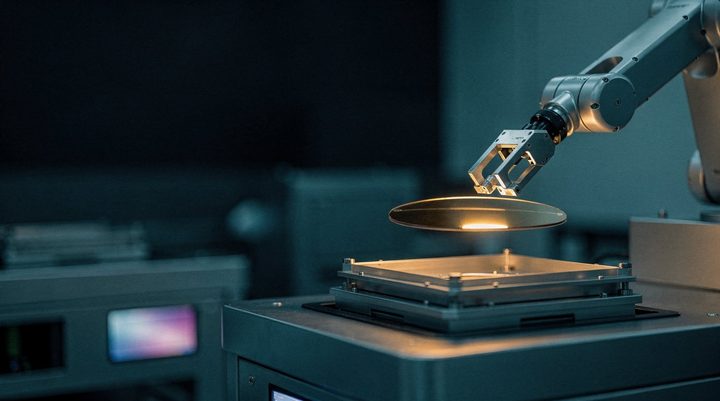
Anthropic Just Made AI Talk to Machines. Talking Was the Easy Part.
Anthropic's AI can now wire up a lab robot in about 8 hours instead of weeks. So why does a new machine in a chip factory still take six months?
Your Factory Already Solved AI's Biggest Problem
Gartner predicts that by 2027, 40% of enterprises will demote or decommission their autonomous AI agents — and the reason is not that the AI underperformed. It is that governance gaps only became visible after a production incident.
Chip Factories Everywhere. Nobody Left to Run Them.
America is building more chip factories than at any point in its history — and it has 33,000 fewer chip manufacturing workers than it did in 2023. That's not a forecast, it's the Bureau of Labor Statistics: 368,400 people this March, against a peak near 401,000.
MES & shop-floor systems
Open the hub, 10 piecesWhat an MES does that the ERP cannot, who is allowed to change a recipe, what the shop floor records and why the layer nobody films decides whether anything ships. The MES Fundamentals motion series lives here.

OpenAI's Data Agent Reads 7 Databases. Not One Is on a Factory Floor
Every number on a company dashboard is a copy. The original was born inside a machine, and it lost something on the way.
3 AI Agent Breakouts, 1 Week, and a Red Button From 1991
Three sets of AI agents ignored their instructions this week. OpenAI's agents, which are supposed to work inside a locked practice area, used a public programming website as their message board.
OpenAI Just Published the Number Chip Fabs Stopped Trusting in 1986
In this Fabspeak episode: • The figure OpenAI published on 6 September 2026: 3.1 agent-workdays per human workday, an agent-workday being 8 hours of machine runtime; the median researcher using over $600 of inference a day, the top 10% over $7,000. • OpenAI's own caveat: a runtime ratio, not a productivity multiplier.
Semiconductors: chips, fabs & yield
Open the hub, 22 piecesWhere the money in a fab is really made or lost: yield, metrology and process control, plus the capacity, packaging and supply-chain stories behind the headline numbers.
Everyone Is Announcing Capacity. Nobody Is Announcing The Number That Decides It.
Nobody is announcing yield — and only one of those decides whether the wafers are worth selling.
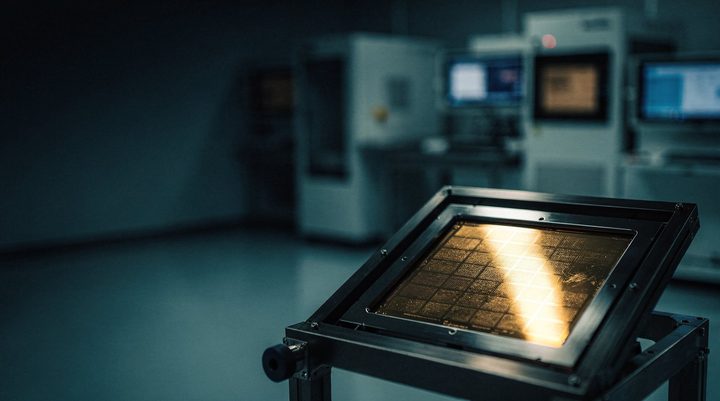
AMD Just Bought an AI Chip That Can Never Be Updated
On 6 August 2026 AMD announced it was acquiring Taalas, a Toronto startup that does something no GPU does: it etches an AI model's weights physically into the silicon. The weights live in a mask-ROM fabric where a single transistor holds a four-bit value and performs the multiplication in the same place the data sits…
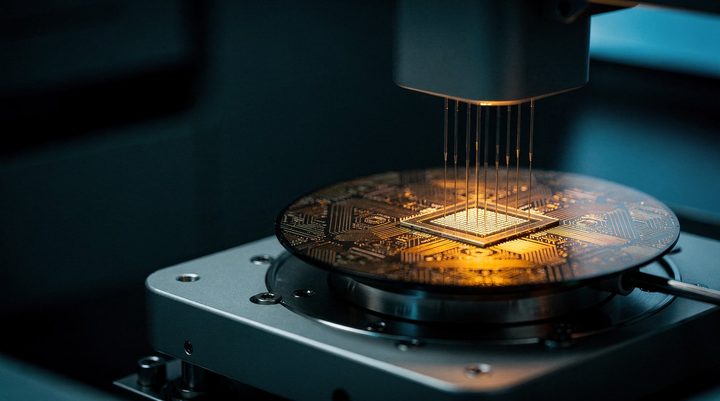
Your Chip Factory Can't Agree Which Die Failed
Every chip on a wafer has an address, and there is a standard for writing it down: SEMI E142, the specification for substrate mapping. The problem is that wafer test data mostly doesn't use it — the XY coordinates coming out of a prober depend on the prober and the recipe combination, and probably don't…