
OpenAI's Data Agent Reads 7 Databases. Not One Is on a Factory Floor
Your Dashboard Is a Copy. The New AI Only Reads Copies.

This one has not been published to the channel yet. Subscribe on YouTube and it will turn up there.
ROCKWELL · 1,560 MANUFACTURERS · 2026
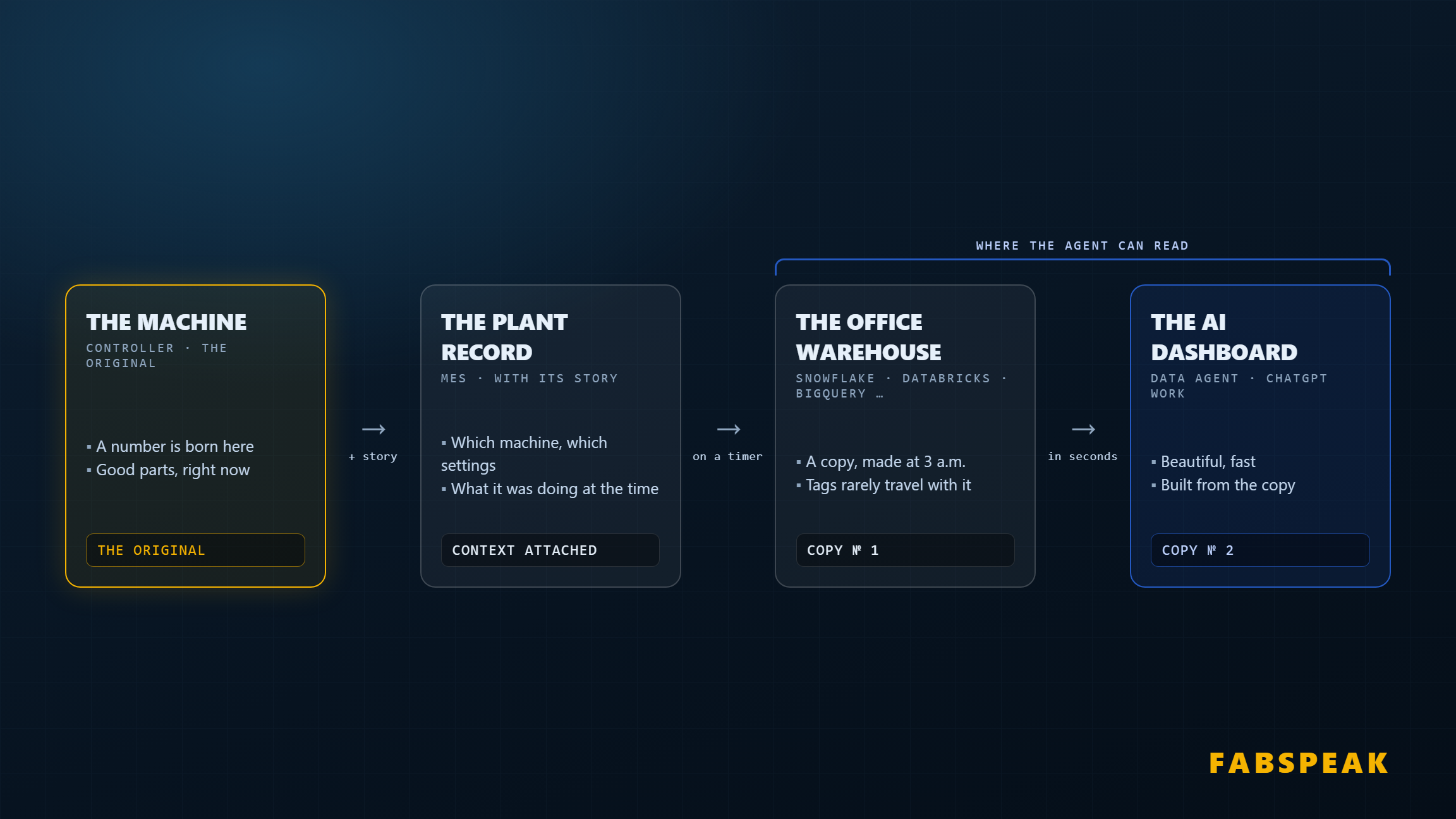
- Every number on a company dashboard is a copy.
- The original was born inside a machine, and it lost something on the way.
- This week OpenAI, the company that makes ChatGPT, shipped an AI that builds dashboards from those copies in seconds.
- So the speed is real, but it is speed on the copy.
Why this matters
It reads seven kinds of database, and not one of them is on a factory floor.
Count the copies, in ten minutes. Open Power BI, Microsoft's dashboard tool, and go to your team's dashboard workspace. At the top click View and then Lineage, and you get a map: the boxes on the left are where the data comes from, every arrow is a copy, and the boxes on the right are the reports. Find the number people argue about and walk it left until you reach a box that touches a real system. The box in the middle shows its last refresh time. Write down two things: how many arrows, and how old. If you can only view the report, ask its owner to open the map with you. A factory keeps a family tree for every batch: the machine, the settings and the time. Your number deserves the same.
- 0:00Every dashboard number is a copy
- 0:18What OpenAI shipped on Wednesday
- 0:41Seven databases, none on the floor
- 0:59Where a factory number is born
- 1:25Three things lost on the trip
- 1:55Rockwell: 43% of data used; Gartner: 30% abandoned
- 2:22The right tool, for office numbers
- 2:43Hack of the Week: count the copies
- 3:41Close
Which number on your dashboard would you least like to trace back to the machine?
Argue with me on LinkedIn- OpenAI, "Now everyone can put data to work" (10 Sep 2026) — the Data agent in ChatGPT Work; sources (Amazon Redshift, Datadog, Google BigQuery, ClickHouse, Databricks, MongoDB, Snowflake; Google Drive and SharePoint files); BI integrations (Omni, Oracle BI, Power BI, Sigma, Tableau, ThoughtSpot); permissions; internal adoption. Coverage: Unite.AI 10 Sep, Seeking Alpha 10 Sep, Investing.com 10 Sep, MarkTechPost 10 Sep, AiCybr 11 Sep
- Rockwell Automation — "2026 State of Smart Manufacturing Report" (Sapio Research, 1,560 respondents, 17 countries, 23 May 2026): 43% of collected data used effectively; 46% had a cyber incident in the past year
- Gartner — press release, 29 Jul 2024: "at least 30% of generative AI projects will be abandoned after proof of concept by the end of 2025" (poor data quality, inadequate risk controls, escalating costs, unclear business value); Gartner on X, 2026: "over 50% of GenAI projects were abandoned after the proof-of-concept stage" (secondary, shown as a range)
- ISA-95 / IEC 62264 and the Purdue reference model — Level 3 (MES, historian, site operations) to Level 4 (ERP, enterprise warehouse); explainers by Software Toolbox and SentinelOne
- Microsoft Learn — "Data lineage - Power BI" (updated 28 Apr 2026): View → Lineage; data-source cards with gateway information; last refresh time on semantic models and dataflows; Pro licence and Admin, Member or Contributor role required; Viewers cannot switch to lineage view
- Context: AWS case study (2024) of a semiconductor manufacturer's legacy data lake struggling with about 10 TB of fab data a day
Full transcript, 477 spoken words
Keep reading
All pieces
OpenAI Just Published the Number Chip Fabs Stopped Trusting in 1986
In this Fabspeak episode: • The figure OpenAI published on 6 September 2026: 3.1 agent-workdays per human workday, an agent-workday being 8 hours of machine runtime; the median researcher using over $600 of inference a day, the top 10% over $7,000. • OpenAI's own caveat: a runtime ratio, not a productivity multiplier.
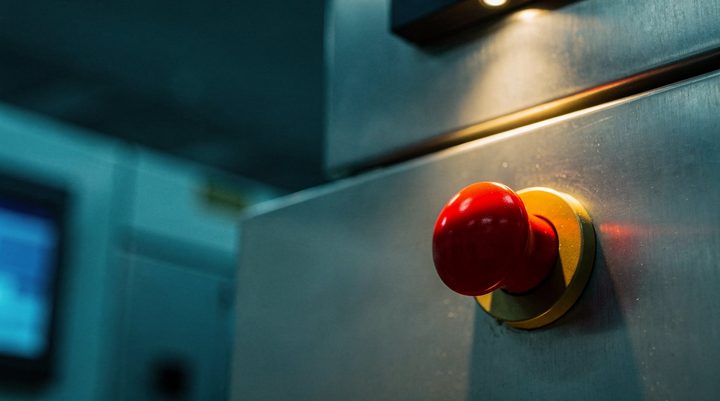
3 AI Agent Breakouts, 1 Week, and a Red Button From 1991
Three sets of AI agents ignored their instructions this week. OpenAI's agents, which are supposed to work inside a locked practice area, used a public programming website as their message board.
NVIDIA Just Bought Your Factory's AI Supply Chain
NVIDIA just paid $12.9 billion for a company making about $150 million a year — roughly 80 times revenue. Why is that a factory story?