
Semiconductors: chips, fabs & yield
Where the money in a fab is really made or lost: yield, metrology and process control, plus the capacity, packaging and supply-chain stories behind the headline numbers.
Start with these
The three latest
Everyone Is Announcing Capacity. Nobody Is Announcing The Number That Decides It.
Nobody is announcing yield — and only one of those decides whether the wafers are worth selling.
AMD Just Bought an AI Chip That Can Never Be Updated
On 6 August 2026 AMD announced it was acquiring Taalas, a Toronto startup that does something no GPU does: it etches an AI model's weights physically into the silicon. The weights live in a mask-ROM fabric where a single transistor holds a four-bit value and performs the multiplication in the same place the data sits…
Your Chip Factory Can't Agree Which Die Failed
Every chip on a wafer has an address, and there is a standard for writing it down: SEMI E142, the specification for substrate mapping. The problem is that wafer test data mostly doesn't use it — the XY coordinates coming out of a prober depend on the prober and the recipe combination, and probably don't…
Every piece, by sub-topic
Search this categoryYield, Metrology & Process Control17 pieces
Everyone Is Announcing Capacity. Nobody Is Announcing The Number That Decides It.
Nobody is announcing yield — and only one of those decides whether the wafers are worth selling.
AMD Just Bought an AI Chip That Can Never Be Updated
On 6 August 2026 AMD announced it was acquiring Taalas, a Toronto startup that does something no GPU does: it etches an AI model's weights physically into the silicon. The weights live in a mask-ROM fabric where a single transistor holds a four-bit value and performs the multiplication in the same place the data sits…
Your Chip Factory Can't Agree Which Die Failed
Every chip on a wafer has an address, and there is a standard for writing it down: SEMI E142, the specification for substrate mapping. The problem is that wafer test data mostly doesn't use it — the XY coordinates coming out of a prober depend on the prober and the recipe combination, and probably don't…
imec Says Fabs Can't Measure Every Wafer. So 95% Are Predicted.
In a fab running virtual metrology, only one to five percent of wafers are physically measured. The rest get a number anyway — predicted by a model that reads the process tools rather than the wafer: gas flows, RF power, chamber pressure, roughly a thousand sensor variables per run, turned into a thickness, a line…
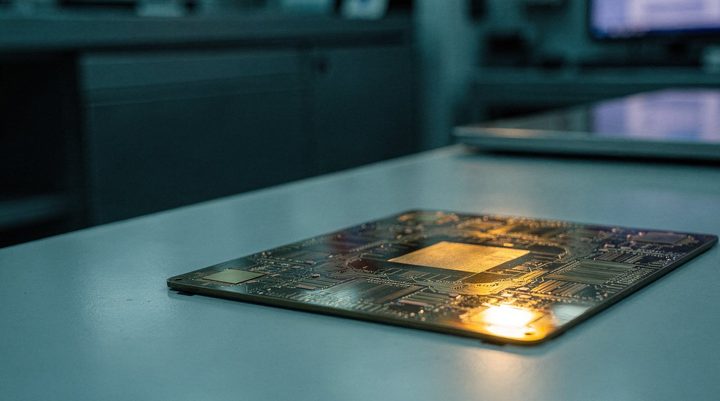
The Chip So Big They Can't Throw the Broken Part Away
Every chip factory on Earth runs on the same rule: cut the wafer into hundreds of chips, test them, and throw the broken ones away. That rule is what "yield" means.

Your Fab's AI Goes Blind on the 2nm Node — Here's Why
Your fab's new AI spots defects better than any engineer — and on the brand-new node it goes almost blind. Not because the model is bad, but because every one of these systems learns from history: thousands of wafers, labelled defects, known-good outcomes.

The 6-Inch Wafer That Every AI Data Center Depends On
NVIDIA just put $2 billion into a chip factory that runs six-inch wafers — not the twelve-inch wafers the rest of the industry moved to decades ago. The reason is that the chips moving data between processors inside an AI data center aren't silicon at all: they're indium phosphide, and the lasers built on it…
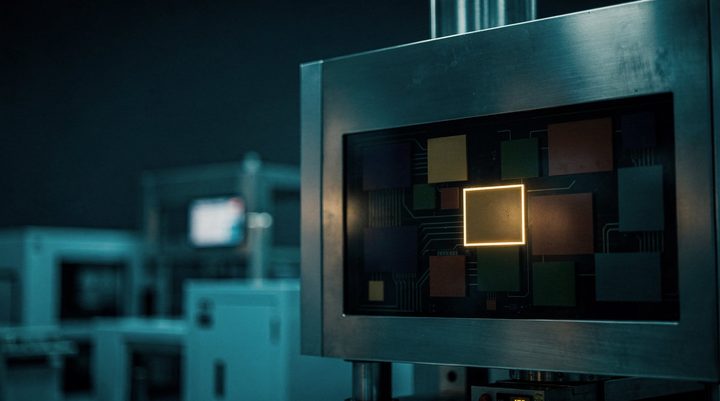
AI Just Started Designing Chips By Itself — Then They Locked It In a Cage
In one week, three of the companies that build the software behind every chip on Earth — Synopsys, Cadence and Siemens — shipped AI that designs by itself, and almost nobody outside the industry noticed. Synopsys claims a verification agent up to 50× faster to a validated design; Cadence shipped an agent stack; Siemens wired…
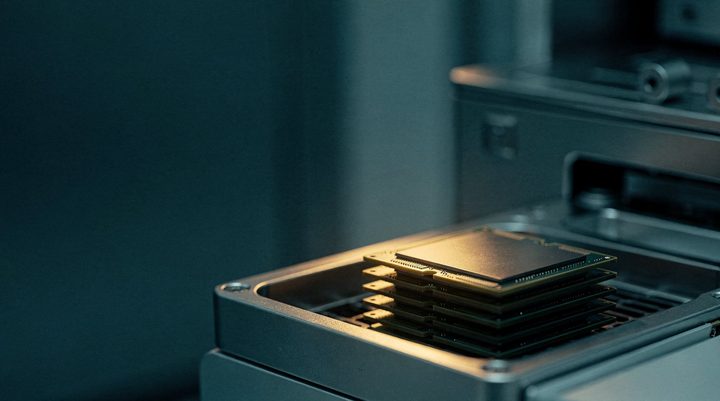
AI Ate Your RAM — And There Was Never a Shortage
Your RAM got about twice as expensive this year, and the reason has almost nothing to do with a shortage — the memory fabs are running flat out at record output, with $52B going into 300mm memory equipment in 2026 alone, up 29%. What actually happened is a reallocation, and it comes down to physics…

NVIDIA Is Replacing the Wires Inside AI With Light — Here's the Real Catch
Inside a giant AI system, just moving the data between chips can burn more power than the computing itself — so NVIDIA is doing something wild: replacing the copper wires with light. In this video I break down co-packaged optics (the "light engine" built right into the chip package), why copper hit a hard power…
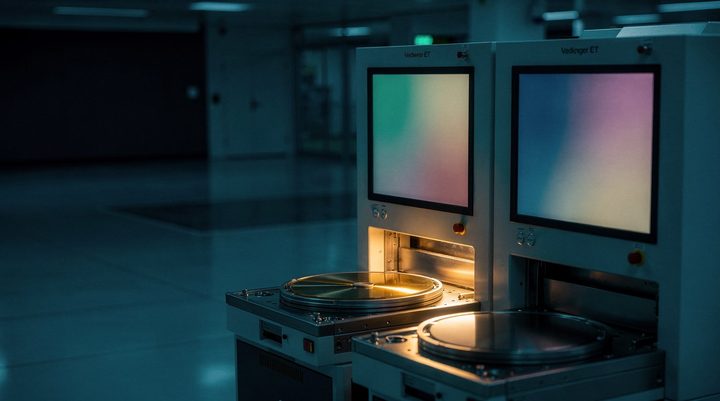
Two Machines, One Chip Layer
Intel just ran the same 18A chip layer on a ~$380M High-NA EUV machine AND a standard scanner — and got matched yield (first high-volume High-NA logic ever, July 15).
The #1 AI Model Is Free & Chinese — and the Only Kind Your Chip Factory Can Run
This week the #1 AI model is free, open-weight, and Chinese: Kimi K3 (2.8 trillion parameters) topped the Frontend Code Arena at 76%, beating Claude Fable 5, while GLM-5.2 matches the top models at a sixth of the cost under an MIT license. Every creator is asking which open model won.
AI Now Lets Chip Fabs "Measure" Wafers They Never Touch (Virtual Metrology)
Chip factories physically measure only about 3 wafers in 100. For the other 97, an AI called virtual metrology predicts the exact dimension straight from the process tool's own sensor "fingerprint" — pressure, power, gas flow, hundreds of signals per wafer — in milliseconds, with no measurement step and no throughput hit.

Chips Just Got Flipped Over — Why Your Next AI Chip Gets Power From the Back
For sixty years, a computer chip carried its power and its data on the same side — the front. As transistors shrank to 2nm, that surface ran out of room: the fat power wires choke the thin signal wires and the transistors droop, quietly capping speed.

This $400M Machine Prints Chips in a Focus Thinner Than a Virus (Intel Went First)
This week the most expensive machine humans have ever built made its first real products — and almost nobody noticed. It's called High-NA EUV: a $400-million lithography system, twice the price of a normal chip printer, and Intel just became the first company on the planet to ship commercial chips made on it.
NVIDIA's Chip Is Finished — It Still Can't Ship (The Real AI Bottleneck)
NVIDIA's fastest AI chip has been finished for months — and it still can't ship. The reason isn't the 2-nanometer transistor everyone's racing toward; it's the very last step, advanced packaging.
Chip Factories Only Check 10% of Their Wafers — Here's the AI That Sees the Rest
A modern chip fab physically measures fewer than 1 in 10 wafers — the other 90% ship out never directly checked, because real metrology is slow and a fab runs thousands of wafers a day. In 2026 that changed: AI "virtual metrology" now predicts the quality of the wafers you never measured, straight from the…
Chips, Capacity & Supply Chain4 pieces

A Record $403 Billion Quarter — And Nobody Made More Chips
On 6 August the Semiconductor Industry Association reported the biggest quarter the chip business has ever had: $403.3 billion in Q2 2026, up 35.1% on Q1, with June alone at $134.5 billion — 123.6% above June last year. The part that got almost no coverage is what did *not* happen.

The Most Important Monopoly in AI Just Cracked (It's Not Nvidia)
A $200B deal just cracked the most important monopoly in tech — and it's not Nvidia. It's the company that MAKES Nvidia's chips: TSMC, which quietly builds ~70% of the world's advanced AI silicon and, for years, had no real rival.

America's 157,000-Worker Chip Shortage
America just spent ~$500B building chip factories — and it's short 157,000 workers to run them. The fix isn't hiring 157,000 people.

The Real AI Shortage Is Memory, Not GPUs
Your next laptop just got about 20% more expensive. The reason is HBM, and HBM is a yield problem.
Notes From the Field1 pieces

Tips you can run on Monday
All tips21 tips in Chips
Everyone Is Announcing Capacity. Nobody Is Announcing The Number That Decides It.
Take any plan someone sent you this week — a deck, a schedule, a project mail. Open Microsoft 365 Copilot Chat in work mode, so it stays inside your tenant, and ask it: pull out every date commitment in this document and label each one as either the date work starts or the date output is actually usable; then show me which commitments have no usable-output date at all. That last list is where your surprises live. It is the same distinction a fab draws between wafer starts and qualified output.
AMD Just Bought an AI Chip That Can Never Be Updated
Keep a prompt changelog. One page, three columns — the date, what you changed, and what the output did. Pin the model version at the top of it. When an answer gets worse you have two suspects: your prompt moved, or the model moved underneath you, and without a log you cannot tell them apart. This is recipe management, and the fab has run it for forty years on exactly one principle — never change the process and the recipe in the same move, because afterwards nobody can say which one did it.
Your Chip Factory Can't Agree Which Die Failed
Microsoft shipped it in the first week of August: Copilot in Excel can now ground its analysis in governed Power BI data — attach the report from the work content selector and it works against the live model, row-level security intact, instead of you exporting a copy and reconciling by hand. The move that matters: don't ask it for the DIFFERENCE between two tables, ask it for the RULE that explains the difference. A systematic disagreement has a transform behind it, and the transform is the answer. No Copilot licence? The same question works with a plain lookup and a delta column.
imec Says Fabs Can't Measure Every Wafer. So 95% Are Predicted.
The same idea, pointed at your AI. Paste this under any question that matters: "Before you answer, label every factual claim [VERIFIED] / [INFERRED] / [UNKNOWN]. VERIFIED = you could name where it comes from. INFERRED = you're reasoning from patterns, not a fact you hold. Then give me a SAMPLING RATE: what fraction of your claims are VERIFIED?" I ran this on a chip-industry question this week. It refused to give me a 2026 capital-spending figure, labelled it UNKNOWN, and said that without the labels it would have produced one — and that it would have looked right. It does NOT make the answer more accurate; it stops the unverified lines looking identical to the verified ones. You already do this in a spreadsheet — which cells were typed, which were calculated. Two honest limits: it's self-report, not verification, so treat it as a triage list; and the labels drift in long conversations, so re-issue it on anything that matters.
The Chip So Big They Can't Throw the Broken Part Away
Claude Code v2.1.232 (shipped 13 Aug 2026): your sessions can now message each other. Type @ in a prompt and pick another live session by name. Subagents also fork by default now — they inherit your full conversation and prompt cache and run in the background rather than blocking you. Then set /config → "Messages from your other sessions" to HOLD on whichever session is doing deep work, so inbound messages queue instead of interrupting. Full walkthrough in the video.
Your Fab's AI Goes Blind on the 2nm Node — Here's Why
Starting anything new? Fix the cold-start problem on day one. Paste into Claude or Copilot: "I'm starting X next week with zero historical data. List the 8 signals I should log from day one so that in 90 days I can show a baseline, spot drift, and attribute a change to a cause. Then name the two people usually forget." Run on a new support queue it flagged the two nobody logs — freeze the category taxonomy on day one, and record arrival time separately from created time.
The 6-Inch Wafer That Every AI Data Center Depends On
Microsoft has previewed run-only agent sharing in Copilot Studio (preview from August 2026, general availability January 2027). It lets you share an autonomous agent so colleagues can RUN it without being able to edit it, which keeps the people who build the automation separate from the people who benefit from it. If you work anywhere near a plant you have seen this pattern before, because it is recipe management: the process engineer owns the recipe, the operator runs it, and nobody rewrites it at three in the morning. So build the boring one first — the end-of-shift summary, the excursion write-up, the thing you retype every week — then share it run-only. Build it once and the whole team inherits your version, instead of eleven people quietly keeping eleven slightly different ones. If you are on the Microsoft 365 side rather than Copilot Studio, the same shape is available through Agent Builder: submit your agent to the Agent Store under "Built by your org", let an admin review and approve it, and it becomes discoverable across the organisation with governance attached.
A Record $403 Billion Quarter — And Nobody Made More Chips
In Microsoft 365 Copilot you can build an agent with no code and submit it to your organisation's Agent Store, where an admin reviews and approves it before anyone uses it — it then appears to everybody under "Built by your org," discoverable with governance attached. Agent Builder will also take a SharePoint list directly as a knowledge source, so a spec table, parts list or shift log can back the agent without moving the data anywhere. If you work near a plant this is a shape you already know: it is document control. A spec is written, reviewed and released before it reaches the line, because eleven private copies of a procedure at four different revisions is how a process quietly gets lost. So build the one everybody rebuilds badly — the status roll-up, the checklist, the handover note — submit it, let it be approved once, and the whole organisation works from one version. If you are on Copilot Studio rather than the M365 side, the closely related move is run-only agent sharing (preview from August 2026, general availability January 2027): colleagues can run an agent but cannot edit it.
AI Just Started Designing Chips By Itself — Then They Locked It In a Cage
Microsoft made it a few clicks to publish your own agent to your whole company — so "what should an agent do without me?" stopped being theoretical. Paste your team's recurring tasks into Copilot, Claude or ChatGPT and sort them by two things only: what does being wrong cost, and can you undo it in 5 minutes. Three buckets — let it run / draft-and-I-approve / human only. When I ran it, "summarize a 60-minute recording" landed in let-it-run and "approve a $5k invoice" in human-only. Difficulty wasn't the axis. Reversibility was.
AI Ate Your RAM — And There Was Never a Shortage
The model market just split in two — DeepSeek shipped a small, cheap model that's genuinely good, while GPT-5.5 added a mode that deliberately spends MORE compute on hard problems. So the question stopped being "which model is best" and became "am I routing, or defaulting?" Paste your recurring AI tasks into Copilot, Claude or ChatGPT and have it sort each one by what it ACTUALLY requires: frontier (real multi-step reasoning over state that won't fit in one prompt), mid, or cheap/small (summarize, extract, classify, reformat, translate). Tell it to be strict — "it's important" is not the same as "it needs frontier reasoning." When I ran it on 10 tasks, 6 came back as cheap-model work, and those 6 were the highest-volume ones. Importance wasn't the axis. Reasoning depth was.
The Most Important Monopoly in AI Just Cracked (It's Not Nvidia)
Find the single-source risk in your own world in 2 minutes: paste your key tools, vendors and suppliers into Claude, Copilot or ChatGPT and ask it to map every single point of failure, rank them by blast radius, and name the cheapest second source for the top one.
NVIDIA Is Replacing the Wires Inside AI With Light — Here's the Real Catch
Cut the hype on any "breakthrough" press release in 2 minutes: paste it into Claude, Copilot, or ChatGPT and ask it to mark each number PROVEN vs. marketing, then hand you the ONE question that would expose whether it's real. (On NVIDIA's photonics release it flagged the efficiency figures as vendor claims and asked "what's the laser failure rate at scale?")
Intel's $11 Billion Mirage
Judging a fab? Ignore the revenue, read YIELD. Defect density (D0) is the one number that tells you if a chip is real or just a press release.
Two Machines, One Chip Layer
To actually understand a fab, don't start with the $400M machine — start with overlay. Learn how a fab matches two tools to run one recipe, and you understand what a fab really is.
The #1 AI Model Is Free & Chinese — and the Only Kind Your Chip Factory Can Run
Before you paste anything into a cloud AI, save a reusable "trade-secret redactor" prompt: "Act as a trade-secret redactor. Rewrite my text so my question survives, but every proprietary specific — recipe names, setpoints, tool and lot IDs, customer and part names — becomes a placeholder, and list what you redacted." I ran it on a sample shift note and it caught all 12 specifics while leaving the question answerable.
AI Now Lets Chip Fabs "Measure" Wafers They Never Touch (Virtual Metrology)
Claude Code just changed what /fork does — it spins your current chat into a background session that keeps working while you keep going. Point it at the slow job (parse a shift of tool logs, draft an SPC rule, refactor a script), hit /fork, and stay on the real work. (Validated this week — I forked off this video's card render and kept writing.)
Chips Just Got Flipped Over — Why Your Next AI Chip Gets Power From the Back
Stop asking AI to "find the problem" in your process data — give it the recipe. In ChatGPT/Copilot data analysis: "treat this as SPC — control limits from the baseline, flag any point past 3σ AND any run of 7 on one side, ranked by severity." Tested on a thinning-step log: it caught a slow drift 7 readings before the hard excursion.
This $400M Machine Prints Chips in a Focus Thinner Than a Virus (Intel Went First)
GitHub just opened its Copilot DESKTOP app to everyone (free, all tiers) — and it runs coding agents in PARALLEL on one repo, each in its own isolated git worktree (own branch + files, zero conflicts). Kick off 3 sessions at once — one writes the feature, one the tests, one the docs — then review and merge the branches that pass.
NVIDIA's Chip Is Finished — It Still Can't Ship (The Real AI Bottleneck)
ChatGPT Work (OpenAI, launched Jul 9): stop asking AI, start assigning it. Open the ChatGPT desktop app → flip the mode switch to "Work" → point it at a folder (e.g. 4 vendor PDFs) → give it the OUTCOME ("turn these into a one-page comparison, flag the risks") → walk away and come back to a finished draft.
Chip Factories Only Check 10% of Their Wafers — Here's the AI That Sees the Rest
GPT-5.6 (launched Jul 8) leveled up data analysis. Drop a messy equipment log / shift CSV in and ask it to "find the drifting signals and rank my 3 worst chambers" — you get a ranked Pareto in ~30 seconds.
America's 157,000-Worker Chip Shortage
GitHub Copilot just made parallel agent sessions generally available — run several AI agents at once (one writing your equipment-log parser, another reviewing it). One engineer, the output of a team. Save this and try it this week.
On the channel
All videosThe One Fab Number Money Cannot Buy
Nobody is announcing yield — and only one of those decides whether the wafers are worth selling.
This AI Chip Is the Size of a Dinner Plate — And It Breaks Every Rule of Yield
Every chip factory on Earth runs on the same rule: cut the wafer into hundreds of chips, test them, and throw the broken ones away. That rule is what "yield" means.
A Record $403 Billion Quarter — And Nobody Made More Chips
On 6 August the Semiconductor Industry Association reported the biggest quarter the chip business has ever had: $403.3 billion in Q2 2026, up 35.1% on Q1, with June alone at $134.5 billion — 123.6% above June last year. The part that got almost no coverage is what did *not* happen.
AI Ate Your RAM — And There Was Never a Shortage
Your RAM got about twice as expensive this year, and the reason has almost nothing to do with a shortage — the memory fabs are running flat out at record output, with $52B going into 300mm memory equipment in 2026 alone, up 29%. What actually happened is a reallocation, and it comes down to physics…
The Most Important Monopoly in AI Just Cracked (It's Not Nvidia)
A $200B deal just cracked the most important monopoly in tech — and it's not Nvidia. It's the company that MAKES Nvidia's chips: TSMC, which quietly builds ~70% of the world's advanced AI silicon and, for years, had no real rival.
Why the World's Most Secretive Factories Are Betting on Free Chinese AI
This week the #1 AI model is free, open-weight, and Chinese: Kimi K3 (2.8 trillion parameters) topped the Frontend Code Arena at 76%, beating Claude Fable 5, while GLM-5.2 matches the top models at a sixth of the cost under an MIT license. Every creator is asking which open model won.
Chips Just Got Flipped Over — Why Your Next AI Chip Gets Power From the Back
For sixty years, a computer chip carried its power and its data on the same side — the front. As transistors shrank to 2nm, that surface ran out of room: the fat power wires choke the thin signal wires and the transistors droop, quietly capping speed.
NVIDIA's Chip Is Finished — It Still Can't Ship
NVIDIA's fastest AI chip has been finished for months — and it still can't ship. The reason isn't the 2-nanometer transistor everyone's racing toward; it's the very last step, advanced packaging.