
Robots Are Taking Over Factories — But They Still Can't Do Your Job
Humanoid Robots Are Flooding Factories in 2026 — Why That's Actually Good News for You
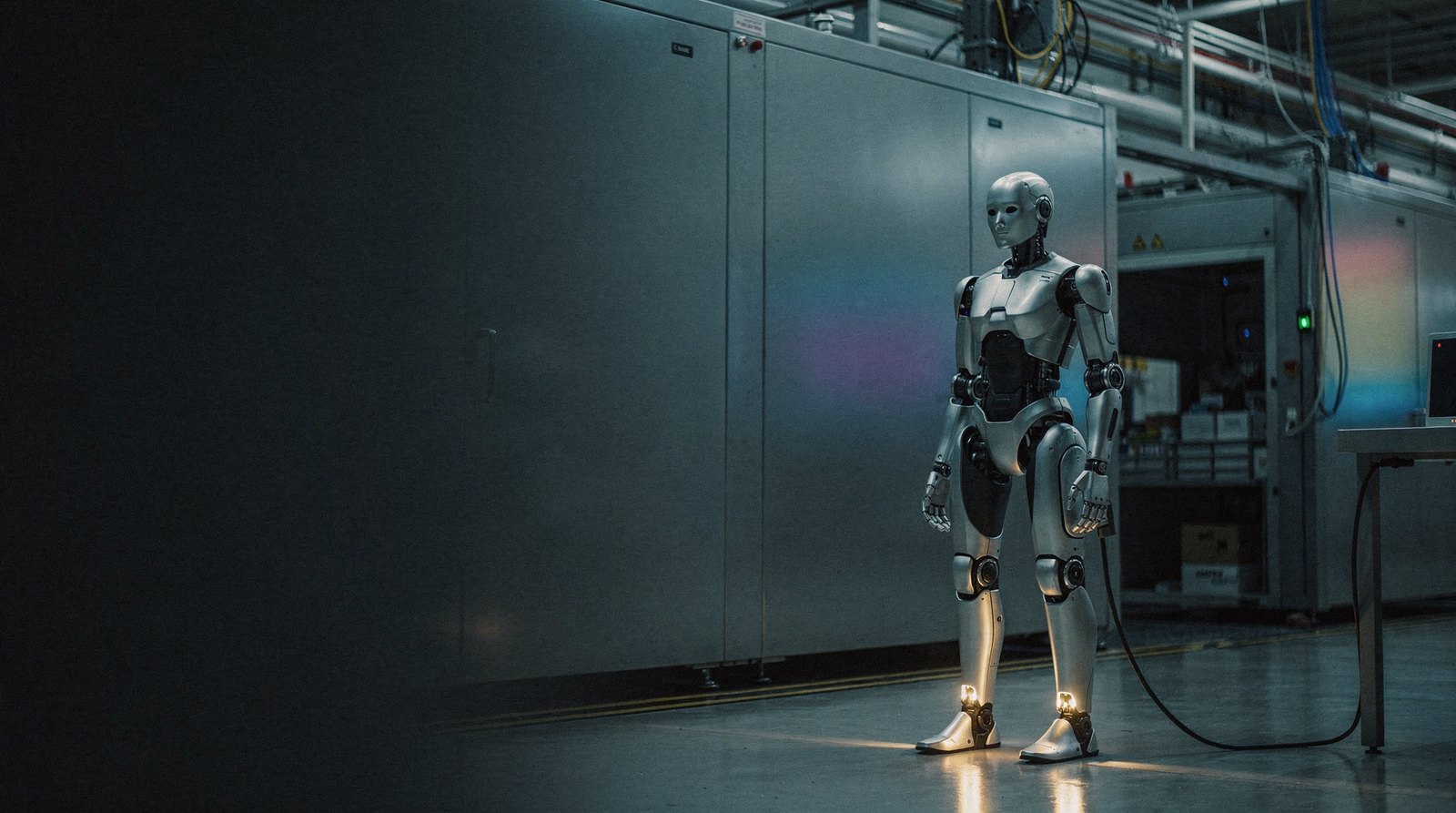
- Humanoid robots are clocking into real factory floors in 2026 — 40 of Figure's robots at BMW (billed at ~$25 a robot-hour), Tesla's Optimus Gen 3 going into production, Boston Dynamics' Atlas heading to Hyundai's $26B plant, and Agility's Digit already moving 100,000 totes at GXO.
- This video breaks down the real deployments and the real numbers — then the part that actually decides whether any of it works: the orchestration layer that plugs a robot into a factory's work orders, quality system, and traceability.
- Why "walking was never the hard part," why the integration software (InOrbit, iFactory, Agility Arc) is quietly becoming the real product, and why factory-scale is a 2030s story, not 2026.
- Broad enough to follow, deep enough to trust — the floor-level truth, plus one AI hack you can use at work this week.
Why this matters
But here's what almost nobody is telling you: the robot is the easy part.
OpenAI just launched ChatGPT Work — an agent that doesn't just answer, it delivers a finished deck or spreadsheet. Open it on desktop → hit Plan mode → type the outcome you want → approve the steps → walk away.
- 0:0040 robots just clocked in at BMW
References for this piece are in the pinned comment on the video. Nothing is cited here that cannot be linked.
Full transcript, 237 spoken words
Keep reading
All pieces
4 Robots, 1 Week, and the Story Everyone Missed
This week four companies — Samsung, Tesla, Unitree, and Foxconn — put humanoid robots on the factory floor at once, and the internet decided it's coming for your job. But the real story is the number nobody headlined.
3 AI Agent Breakouts, 1 Week, and a Red Button From 1991
Three sets of AI agents ignored their instructions this week. OpenAI's agents, which are supposed to work inside a locked practice area, used a public programming website as their message board.
OpenAI Just Published the Number Chip Fabs Stopped Trusting in 1986
In this Fabspeak episode: • The figure OpenAI published on 6 September 2026: 3.1 agent-workdays per human workday, an agent-workday being 8 hours of machine runtime; the median researcher using over $600 of inference a day, the top 10% over $7,000. • OpenAI's own caveat: a runtime ratio, not a productivity multiplier.